
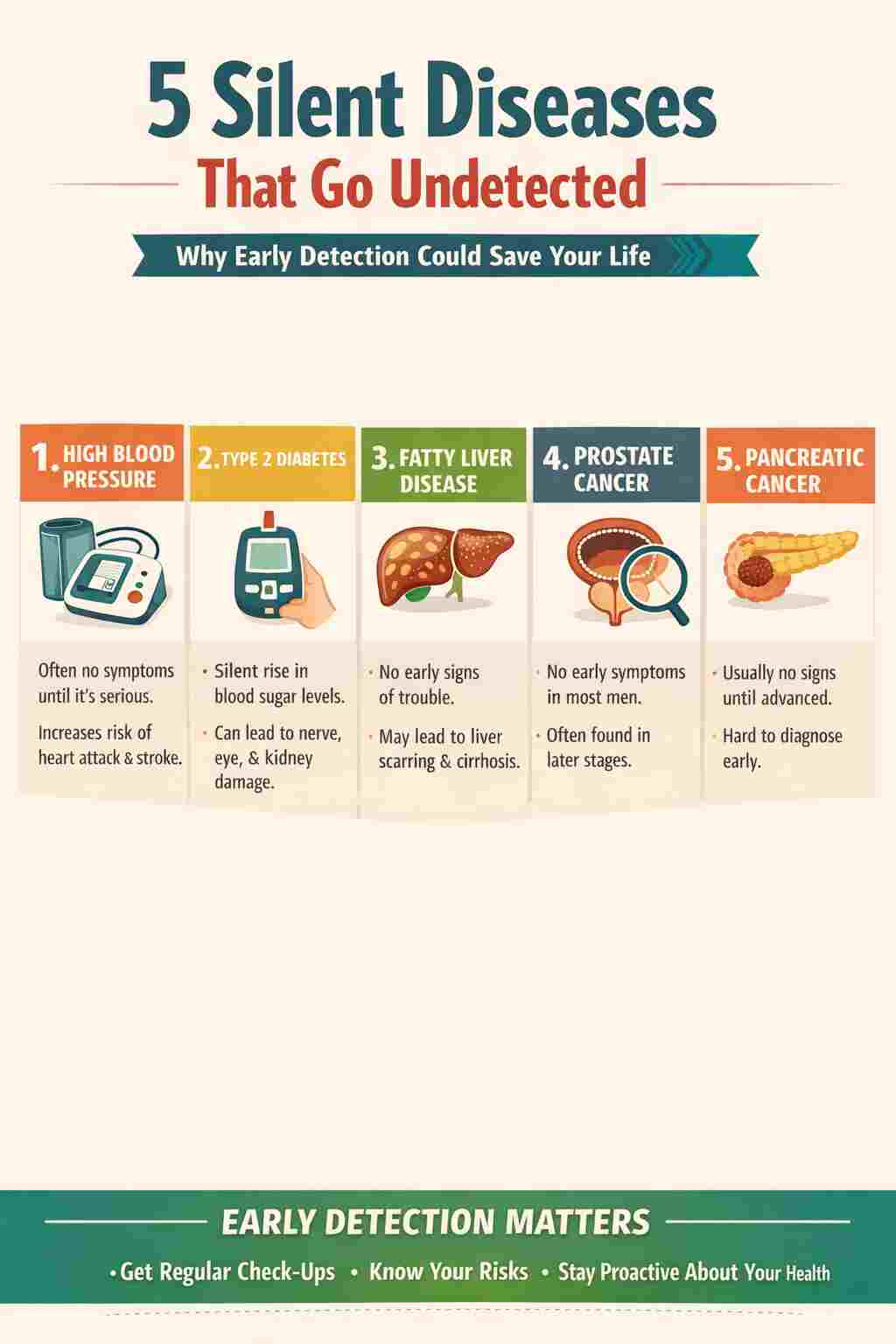
Every day, millions of people feel perfectly fine, yet inside their bodies, serious health issues may be progressing quietly. These aren’t the sorts of illnesses that announce themselves with dramatic symptoms like sudden pain or visible discomfort. Instead, they grow quietly — sometimes for years — and only make themselves known when they’ve already caused significant damage. That’s why health experts around the world emphasize regular screenings and vigilance, even when you feel healthy.
In this article, we explore five such silent diseases — conditions that are difficult to detect early because they rarely show symptoms until they’re advanced. Understanding them can not only raise awareness but also encourage early action, which can make a life‑saving difference.
1. High Blood Pressure — The Classic Silent Killer
High blood pressure, medically known as hypertension, is perhaps the best‑known example of a silent disease. Most people with early‑stage hypertension feel absolutely normal. There’s no pain, no sign that something serious is brewing. Yet, over time, the force of blood pushing against artery walls begins to damage your heart, kidneys, and brain.
That’s why doctors often call it a silent killer. Many individuals learn they have high blood pressure only during routine check‑ups or when a serious health event — like a heart attack or stroke — occurs. What makes this even more concerning is that hypertension is becoming common at younger ages around the world, largely due to stress, sedentary lifestyles, salty diets, and other modern habits.
The good news? A simple blood pressure reading can catch this problem long before it becomes dangerous, and a few lifestyle changes — like reducing salt, staying active, and managing stress — can do wonders.
2. Type 2 Diabetes — Quiet Damage With Major Consequences
Type 2 diabetes doesn’t usually burst onto the scene with dramatic symptoms. In its early stages, many people don’t notice anything unusual at all. Occasionally there might be subtle changes like feeling a bit more tired than usual, a little thirsty, or a little more frequent urination — but those signs are easy to overlook or attribute to a busy life.
The real danger comes because uncontrolled blood sugar slowly damages blood vessels and nerves throughout the body. Over time, it can affect your heart, eyes, kidneys, and even your nerves. Because the symptoms are so easy to dismiss, diabetes often goes undiagnosed until complications begin to appear.
Thankfully, a simple blood test can reveal elevated sugar levels long before major damage sets in. With early detection, it’s possible to manage diabetes effectively with diet, exercise, and medical care.
3. Fatty Liver Disease — A Hidden Epidemic
Fatty liver disease, especially the non‑alcoholic type, has quietly become one of the most common health problems worldwide. In this condition, excess fat collects in the liver, and for a long time, it doesn’t make you feel sick or uncomfortable. Many people go about their lives completely unaware that their liver is being stressed.
If it progresses, fatty liver can lead to inflammation, scarring, and even serious liver damage. The alarming part is that this condition is often linked to lifestyle factors like poor diet, little activity, obesity, and diabetes — all of which are increasingly common. Regular health screenings that include liver function tests or ultrasounds can pick up the problem early, giving you a chance to reverse it with healthier living before permanent damage happens.
4. Prostate Cancer — A Silent Threat for Men
When we talk about cancers that don’t show early signs, prostate cancer deserves special attention. In the early stages, most men don’t experience any obvious symptoms. Because the prostate is small and internal, tumors can grow for a long time without causing pain, urinary changes, or other dramatic effects.
This is why many men only get diagnosed once the cancer has progressed and become harder to treat. Early screening through prostate‑specific antigen (PSA) blood tests and regular check‑ups can make a big difference in catching it sooner, when treatment options are more effective.
5. Pancreatic Cancer — The Hidden Cancer
Pancreatic cancer is one of the most notorious silent diseases. The pancreas sits deep inside your abdomen, and early tumors often don’t cause symptoms that would make someone rush to a doctor. Mild discomfort, fatigue, or slight changes in appetite might appear, but these are easily dismissed as stress or indigestion.
The harsh reality is that many pancreatic cancer diagnoses happen only when the disease is advanced and harder to treat. There are no simple screening tests for everyone yet, so awareness of even subtle changes in health, combined with risk factor management — like avoiding smoking and maintaining a healthy weight — is especially important.
Why Awareness and Regular Check‑ups Matter
What all these silent diseases have in common is that they don’t wait for symptoms to become harmful. They quietly affect major organs and systems in the body and only announce themselves when significant damage may already be done. That’s exactly why proactive healthcare — regular screenings, honest conversations with your doctor, and lifestyle awareness — is so vital.
Whether you’re 25 or 60, taking control of your health today can help you avoid serious problems tomorrow. The body often whispers long before it shouts — and if we learn to listen with the help of regular medical check‑ups, we empower ourselves to live healthier, longer lives.
Leave a Reply